Posts

What is listening?

Listening Listening is the most important skill. We spend more time using our listening skills than any other skills. It is an active process. It requires attention. What is effective listening? The process of analyzing sounds,organizing them into recognizable patterns, interpreting the patterns and understanding the message by inferring the meaning. Many problems in life do occur due to ineffective listening or lack of listening. Where does listening stand? Listening is the foremost form of communication. Listening -speaking- reading- writing. Listening and hearing differ? Hearing is the first stage of listening.  Hearing occurs when ears pick up sound waves which are then transported to our brain. This stage is our sense of hearing. Listening is an active process. we must be an active participant in this communication process. In active listening, meaning and evaluation of a message must take place before a listener can respond to a speaker. The...

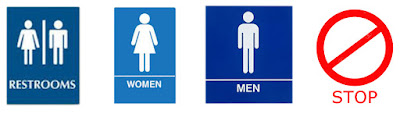
Non-Verbal Communication

Image
Anything that is not spoken Expressions The action of making known one's thoughts or feelings. A look on someone's face that conveys a particular emotions. Emotions A strong feeling deriving from one's circumstances, mood, or relationships with others. Instinctive or intuitive feeling as distinguished from reasoning or knowledge. Sign language/ signals Sign languages are languages that use the visual- manual modality to convey meaning. Sign languages are expressed through manual articulations in combinations with non- manual elements. Sign languages are full-fledged natural languages with their own grammer and lexicon. Sign languages are not universal and they are not mutually intelligible with each other, although there are also striking similarities among sign languages. There are somewhere between 138 and 300 different types of sign language used throughout the world today. New sign language frequently evolve amongst gr...

What Is Semiotics ?

Image
Semiotics It is the study of signs and symbols. Founded by swiss linguist (Ferdinand de saussure) from french, 26 November 1857- 22 february 1913 was a swiss linguist and swniotician. His ideas laid a foundation for many significant developments in both linguistics and semiology in the 20th century. He is widely considered one of the founders of 20th century linguistics and one of two major founders together with charles sanders peirce of semiotics / semiology. Other contributors include American philosopher charles sanders peirce and french theorist Roland Barthes. What is Text? Semiotics is employed in the analysis of texts. 'Text' can exit in any medium and may be verbal, non verbal or both. The term 'text' usually refers to a message which has been recorded in some. It is physically independent of its sender or receiver. What is a Sign? All the texts are composed of signs. A gesture or action used to convey information or an instruc...

Theories of Visual Communication

Image
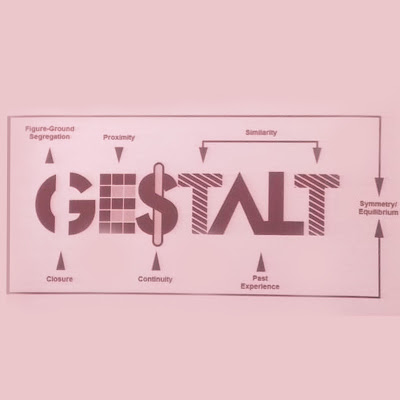
Theories of visual perception ( Gesalt Theory ) Theories of visual perception Theories of visual perception Developed by German psychologists in the 1920s Similarity- object look similar to one another. Group or pattern. Same characteristics. Proximity Proximity occurs when elements are placed close together. Things which are closer together will be seen as belonging together. Continuation Eye is compelled to move through one object and continue to another object. Closure When an object is complete or a shape is not completely enclosed. If enough of the shape is indicated, people perceive the whole by filling in the missing information. Figure and Ground The eye differentiates an object from its surrounding area, a form, silhouette, or shape is naturally perceived as figure ( object), while the surrounding are in perceived.

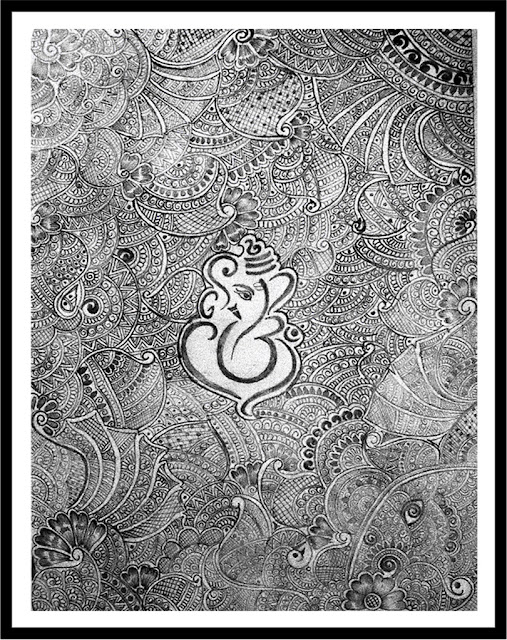
Ganesh Madhubani Art

Image

Typology Communication

Image
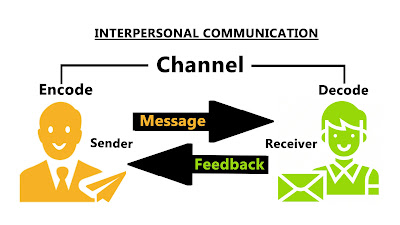
Interpersonal Communication Interpersonal communication is the process to express feelings, ideas, thoughts, information, and emotions. It usually takes place in the form of a message. This can be in the form of verbal (words) or non verbal (how anything is said) like it includes Gestures, Eye- contact, Body language communication. Everybody communicate on interpersona l level regularly. The 5 characteristics of interpersonal communication Interpersonal communication is the complex process through which people express, interpret, and coordinate messages in order to create shared meaning, meet social goals, manage personal identity, and carry out their relationships.  Interpersonal communication is a process, or a systematic series of actions that leads to an outcome. The purposes of interpersonal communication include: share meaning, meet social goals, manage personal, and conduct relationships.  There are five characteristics of interpersonal communication. Int...

Design Is Nothing But CRAP

Image
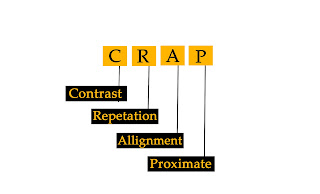
The principle starts with Balance Balance is an equal distribution of weight. In terms of graphics, this applies to visual weight. That is determined by its size, darkness, or lightness, and thickness of lines. Empty space ( white space) and filled space. Text and images Color/ no colors and different colors. Line of vision direction Orientation and location of an element. Color- Hue, value, saturation, temperature. Black often weight more than white Dull tones are light  weight, bright tones are valuable. Types of Balance Symmetrical- evenly distributed to the left and to the right, or to top and bottom of center. Asymmetrical- asymmetrical balance is an arrangement of unlike objects of equal weights on each side of the page. Color, value, size, shape and texture cam be used as balancing elements. Visual Hierarchy Organizing information and clarifying communication Emphasis Arrangement of visual elements according to the importance. ABC...